Week 1: the sounds English does not have
- Nasal vowels. The an of vent, the on of bon and the in of vin and pain. The air goes through the nose and there is no n sound at the end. Say bon without closing your mouth on an n.
- U and ou. Tu and tout are different words. For the u, say ee and round your lips as if for oo, without moving your tongue.
- The r. French r is made at the back of the throat, not with the tip of the tongue. It is closer to a soft gargle than to an English or Spanish r.
- Silent letters. Final consonants are usually silent: petit, grand, vous. The final e is silent too. But when the next word starts with a vowel, the consonant comes back and links: vous avez sounds like vou-za-vez. This is liaison, and it is why French sounds like one long word.
- No word stress. French puts a light stress on the last syllable of the phrase, not on one syllable in each word. Keep the syllables even and let the end of the phrase rise or fall.
Week 2: spoken verbs are simpler than written ones
On paper, parler has six present forms. Out loud, je parle, tu parles, il parle and ils parlent all sound the same. To speak, you need three spoken forms, parle, parlons and parlez, not six written ones. Learn the verbs by ear first.
Then learn the six verbs you will use in every conversation: être, avoir, aller, faire, vouloir and pouvoir. For the future, use aller plus the verb: je vais manger. For the past, learn the passé composé, j'ai mangé, je suis allé, which is the past tense of conversation. The other tenses can wait.
Week 3: words, with their gender
Learn every noun with its article: le pain, la table, un café, une bière. A noun without its gender is only half learned, because the articles and adjectives depend on it.
You already know more French words than you think. A large share of English vocabulary came from French, so table, restaurant, important, village and thousands of other words are the same on paper. Say them the French way, with even syllables and the French r, and they become French.
Numbers need a separate hour. In France, seventy is soixante-dix, sixty and ten, and ninety is quatre-vingt-dix, four twenties and ten. Belgium and Switzerland say septante and nonante.
Week 4: the conversation
There are three ways to ask a question. Raise your voice at the end, Tu viens? Put est-ce que in front, Est-ce que tu viens? Or turn the verb around, Viens-tu? The first two are what you will hear most. Use vous with people you do not know and tu with friends, and when in doubt use vous.
Then put it to use. Order at a café, check in at a hotel, ask for the way. Practise whole phrases rather than single words, because liaison and elision, as in j'ai and l'eau, change how words sound once they are next to each other.
A daily routine that fits in five minutes
- One sound for the week. Start with the nasal vowels, then u against ou, then the r.
- One short drill. A few phrases built around the sound. Say them, listen to what shifted, say them again.
- One short scene. One goal, one conversation, with someone answering you.
- Every day. The French r and the nasal vowels are muscle movements. They need daily repetition more than explanation.
How Mimica fits this plan
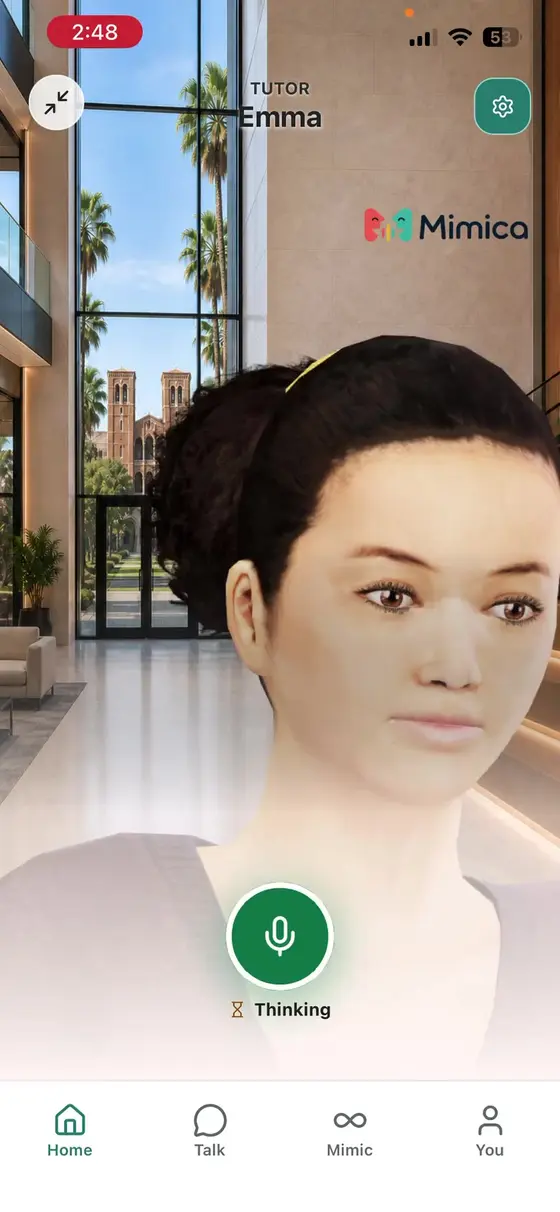
Mimica is an app for iOS and Android where you speak French out loud with AI tutors and characters. You play roleplay scenes with a goal, such as ordering at a Paris café or checking in at a hotel front desk, and the tutor adapts to the level you chose during setup. Mimic practice works phrase by phrase and shows you which sounds shifted. Subtitles and instant translation are there in your own language whenever you need them. The Free plan gives you five minutes of speaking a day.