What is easy
- Shared vocabulary. A large share of English words came from French or Latin, so thousands of them are the same or nearly the same in writing: table, important, restaurant, nation, possible.
- Word order. Subject, verb, object, as in English. Most sentences translate word by word.
- Spoken verbs. On paper a verb has six present forms. Out loud, four of them sound the same.
- Spelling to sound. The rules are regular. Once you know them, you can pronounce a written word you have never seen.
- The future and the past of conversation. Aller plus the verb for the future, and the passé composé for the past, cover most of what you will say.
What takes time
- The sounds. Nasal vowels, u against ou, the r at the back of the throat, and the silent e. None of them exist in English.
- Listening. Words link together, and casual speech drops syllables. Il y a becomes "ya", and je ne sais pas becomes "chais pas". The ne of the negative often disappears. Reading French does not prepare you for this.
- Gender. Every noun is masculine or feminine. The endings help, tion is feminine and age and ment are masculine, but there are exceptions, and the articles and adjectives follow the gender.
- Agreement in writing. Adjectives and past participles change their spelling to match the noun, even when the sound stays the same.
- Two past tenses. The passé composé for events and the imparfait for background and habits. Choosing between them takes practice.
- Numbers. In France, seventy is sixty-ten and ninety is four-twenties-ten.
- Tu and vous. Two ways to say you, and the choice says something about the relationship.
It depends on your first language
- Spanish, Italian, Portuguese, Romanian. The grammar is familiar and the vocabulary is close. The sounds are still new, in particular the nasal vowels, the u and the r.
- English. The vocabulary is the big advantage. The sounds, gender and listening are the work.
- German, Dutch. The u sound and the r at the back of the throat already exist in these languages, which helps. Gender exists too, but the genders do not match.
- Arabic. A similar r sound exists in Arabic, and French is widely spoken in North Africa, so input is easy to find. Nasal vowels and gender are the new parts.
- Japanese, Korean, Chinese. Almost everything is new: gender, articles, verb endings, the r and the nasal vowels. The vocabulary overlap is small.
How long it takes
The US Foreign Service Institute, which trains diplomats, puts French in its easiest group for English speakers, at about 30 weeks of full-time study, around 750 class hours, to reach professional working proficiency. Everyday conversation comes much sooner, especially if most of your hours are spent speaking and listening rather than reading.
What makes it easier
- Learn the sounds in the first two weeks, before you worry about spelling.
- Learn every noun with its article, so gender comes for free.
- Practise phrases, not words. Liaison changes how a word sounds next to its neighbours.
- Listen to casual speech early, so that "chais pas" does not surprise you later.
- Speak a few minutes every day. The r and the nasal vowels are muscle movements.
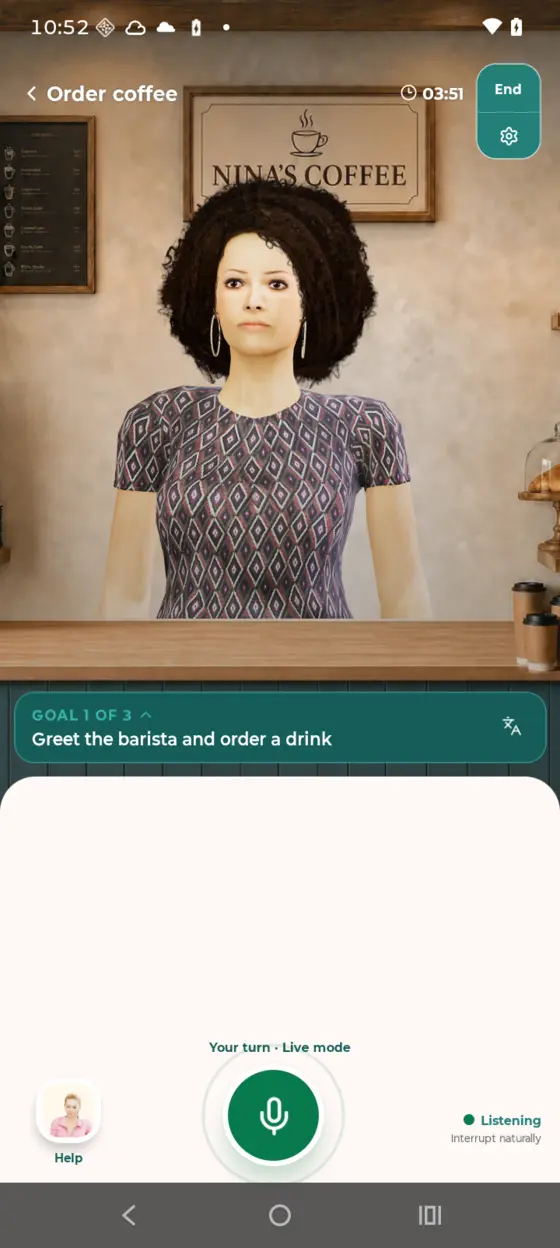
Mimica is an app for iOS and Android where you speak French out loud with AI tutors and characters, play scenes with a goal, such as a Paris café or a hotel front desk, and drill pronunciation phrase by phrase. The tutor adapts to your level, and subtitles and translation are there in your own language. See how to learn French by speaking for a first-month plan.